Bumps, how do I want to play
Artist Residency Guapamacátaro Art & Ecology, Maravatio
México
Winter 2024/2025
Interspecies Relations
12.10.2024-01.20.2025
Material experimentation with invasive Water Hyacinth, DSV paper playscape prototyping
DSV paper playscape prototyping
The primary “invasive species” we use for fibre is Dog Strangling Vine (DSV), a plant native to Ukraine and Russia, which became the main plant that we collected with stewards in Tkaronto and Tiohtià:ke-Mooniyang-Montréal. We started to develop a relationship with DSV, hosting seven workshops and making paper from the outer-layers of the stems. We became fascinated with interspecies relationships that deepened our connection to DSV and led us to focus on monarchs. DSV is related to the native milkweed and grows in colonies which crowd out native plants and disrupt the life cycle of monarchs. Monarch caterpillars rely on milkweed to successfully reproduce because milkweed serves as a nursery for their young. When the monarchs mistakenly lay their eggs on DSV, the baby caterpillars are not able to reach maturity as butterflies and migrate to the pine-oak forests across the state of Michoacán, Mexico.
Going to Michoacán allowed us to follow these interspecies relationships across a great distance. In Mexico we came to expand our understanding of “invasive” and relationships to plants and material from learning about aquatica delirio and the tulle plant growing in local reservoirs wherein land stewards manage their over abundance through consistant removals.
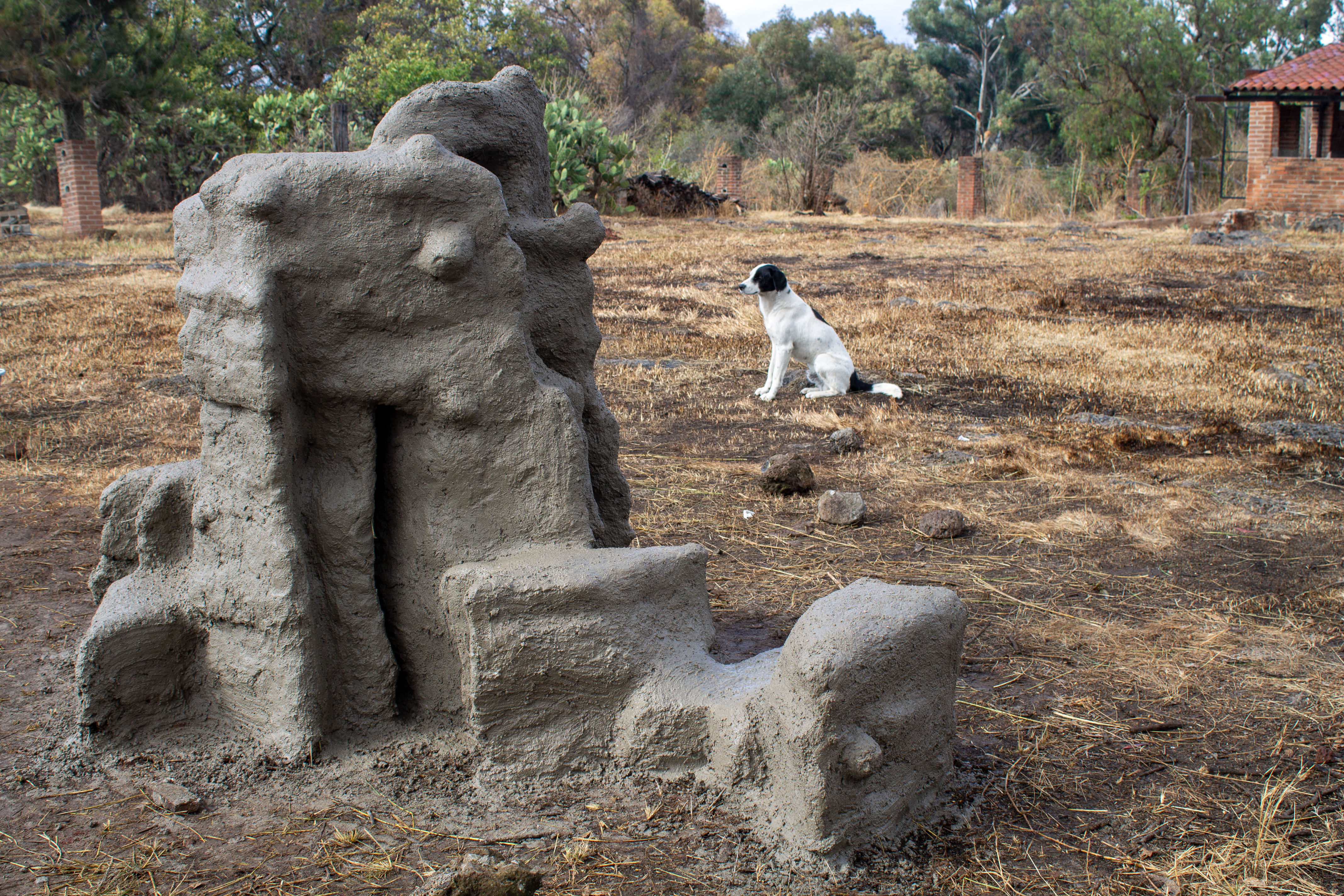
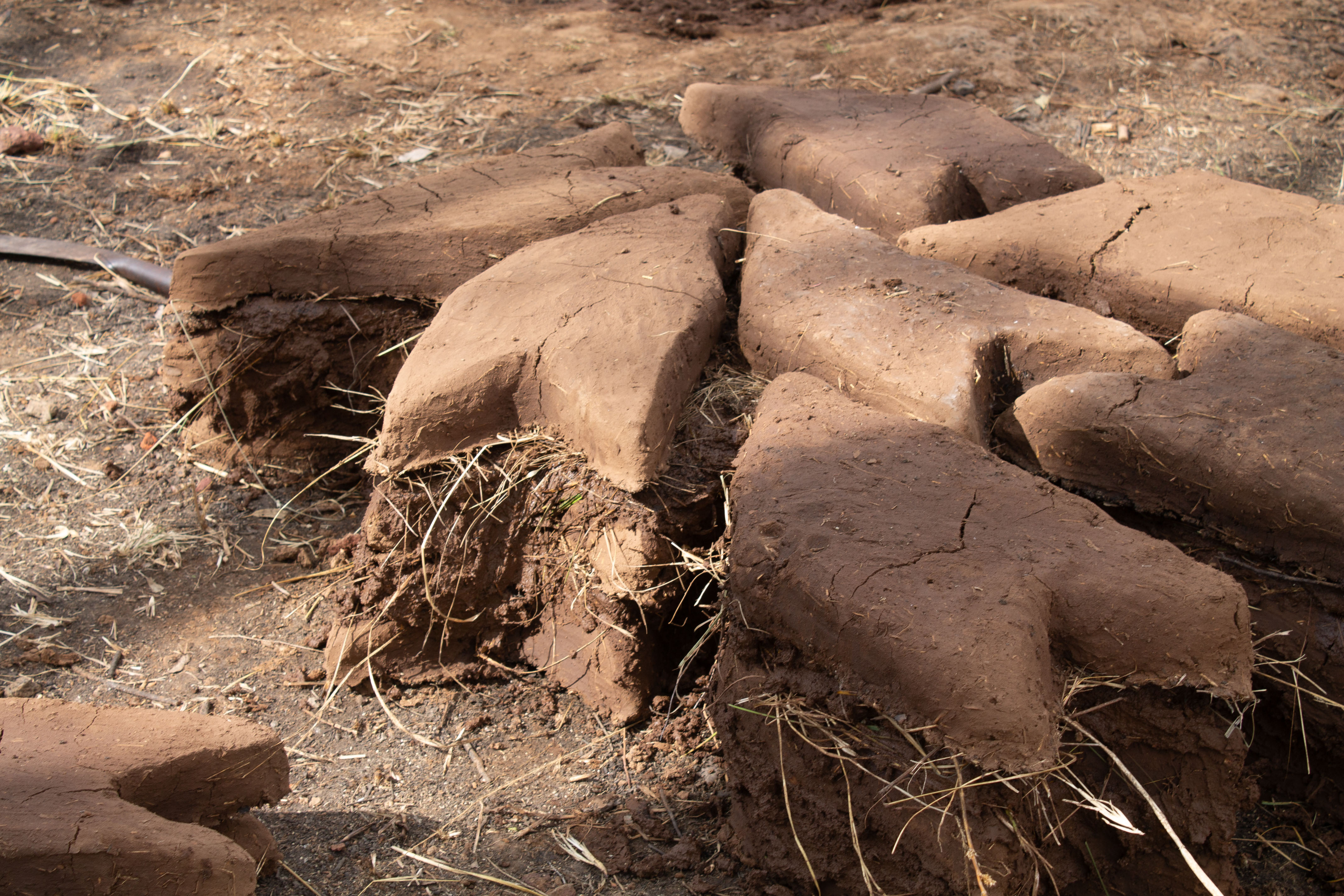
Our final 10 days at the residency we focused on processing new adobe bricks from a recently crumbled wall on site. We made of a total of 65 adobe bricks from the fallen brick wall, which were turned into this playscape for the start of a new playground project organized by Alicia Maravan.
We acknowledge the support of the Canada Council for the Arts.